

The former Secretary General of the Sports Writers Association of Liberia (SWAL) has sharply criticized the Liberia Football Coaches Association (LIFOCA) for its decision to indefinitely suspend Coach Nathaniel S. Sherman, describing the move as procedurally flawed, unprofessional, and lacking due process.
Coach Sherman, who was recently appointed Deputy Technical Director of the Liberia Football Association (LFA), was suspended by LIFOCA following comments he made on social media in response to a Facebook post. In his remarks, Sherman questioned the competency and qualifications of coaches holding License A and B, asserting that none surpassed him in suitability for the position despite his License C status.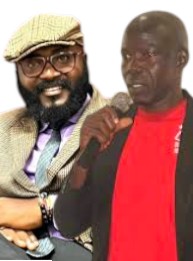
Although Sherman later issued a public apology, stating that his comments were not intended to disrespect fellow coaches, LIFOCA rejected the apology and announced a series of sanctions following an Executive Committee meeting held on Wednesday, January 28, 2026. The association declared that it would no longer work with Sherman in his role as Deputy Technical Director, would boycott any coaching activity involving him, and suspended his membership indefinitely.
Reacting to the decision, a FIFA-trained journalist and former Secretary General of the Sports Writers Association of Liberia (SWAL), D. Webster Cassell, faulted LIFOCA for what he described as a failure to follow basic disciplinary and governance standards. According to him, no professional association should impose sanctions without first referring the matter to a disciplinary or grievance and ethics committee for investigation and recommendation.
“How do you suspend a member indefinitely without due process?” the journalist questioned. “Standard procedure requires that alleged misconduct be investigated by a disciplinary body, after which recommendations are forwarded to the executive or general body for action. None of these fundamental steps were clearly demonstrated.”
He further rebuked LIFOCA for failing to cite any specific statutory, or regulatory provision that Sherman’s remarks allegedly violated, noting that branding a statement as “reckless” or “unprofessional” without reference to written rules weakens the legitimacy of the decision.
The journalist also raised concerns about transparency, pointing out that LIFOCA did not clearly inform the public whether the decision was reached through a vote, executive action, or a properly constituted disciplinary process. This lack of clarity, he argued, fuels perceptions that the action was sentimental or politically driven, rather than grounded in established governance procedures. While acknowledging that Sherman’s comments were controversial, the SWAL former SG maintained that the coach’s apology should have been considered a good-faith effort at reconciliation, not grounds for escalation. He warned that rejecting apologies outrightly discourages accountability and dialogue within a professional environment.
The suspension has also raised new criticism of LIFOCA’s leadership, with observers accusing the association of acting prematurely against its members while remaining inconsistent in defending coaches against external pressure, harassment, and professional marginalization.
According to the FIFA-trained journalist, the procedural gaps surrounding the decision could expose LIFOCA to legal challenges should Sherman seek redress under the laws of Liberia. “Authority without due process is not leadership,” he said. “It is arbitrariness.” As the debate continues within Liberia’s football circle, calls are growing for LIFOCA to revisit the decision, clarify its disciplinary framework, and recommit to transparent, rule-based governance that protects both professional standards and the rights of its members.
By: Alfred Morris
Leave a Reply