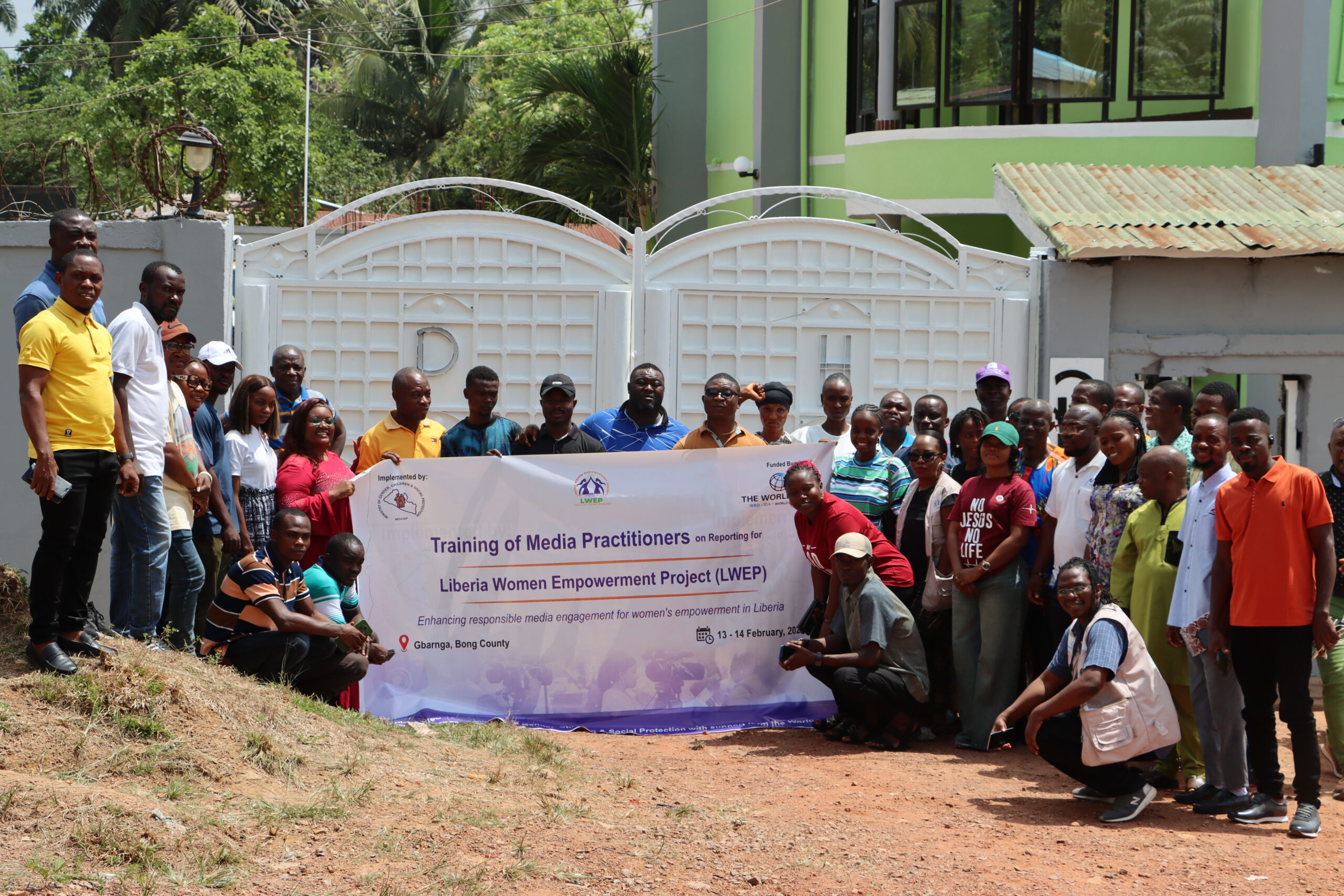
(Gbarnga, Bong County), The Liberia Women Empowerment Project (LWEP), implemented by the Ministry of Gender, Children and Social Protection (MGCSP) with support from the World Bank, on Thursday, January 12, 2025 officially commenced a two-day training for journalists and media partners in Gbarnga, Bong County.
The training, organized by the Lead Service Provider under LWEP, has brought together media practitioners from the six project-targeted counties to strengthen their understanding of the project and promote gender-responsive, ethical, and fact-based reporting on women’s empowerment initiatives across Liberia.
Making the opening remarks, Mr. Jesse James of the Women Empowerment Division at the Ministry of Gender, Children and Social Protection welcomed participants and emphasized the critical role of the media in advancing the goals of LWEP. He encouraged journalists to use their platforms to promote accurate, balanced, and responsible reporting that supports women’s empowerment and national development.
According to the training organizers, the primary objective of the training is to deepen journalists’ knowledge of LWEP’s goals, components, and interventions; promote gender-sensitive and ethical reporting practices; strengthen media engagement in advancing positive social norms; and improve coverage of women’s economic empowerment, sexual and gender-based violence (SGBV) prevention, and institutional reforms.
During the opening sessions, participants received a comprehensive overview of LWEP’s five key components. These include changing harmful social norms and strengthening community engagement; combating SGBV; advancing women’s economic livelihoods and skills development; strengthening public institutions to advance gender equality; and reinforcing project management, monitoring and evaluation, and the Grievance Redress Mechanism (GRM).
Thursday marked day one of the training. Day two will continue tomorrow and will focus on the LWEP Communication Strategy, gender-responsive and sensitive reporting, ethical and fact-checking practices, and the media’s role in monitoring LWEP and strengthening the national gender system.
Facilitators noted that the media’s role is critical in ensuring transparency and accountability, as well as in amplifying the voices of women and girls, particularly in rural and underserved communities.

The initiative underscores LWEP’s commitment to transparency, accountability, and citizen engagement. By equipping journalists with the necessary knowledge and ethical tools, the project aims to ensure accurate, balanced, and impactful reporting that reflects the lived realities of women and girls across Liberia.
As LWEP enters its second year of implementation, the engagement with the media signals a strategic effort to strengthen partnerships that will help drive inclusive development and gender equality nationwide.
The Liberia Women Empowerment Project remains a flagship Government of Liberia initiative designed to advance women’s economic empowerment, address harmful social norms, strengthen systems to respond to SGBV, and enhance citizen participation in national development.
By: Alfred Morris
Leave a Reply