…𝗩𝗮𝗹𝗶𝗱𝗮𝘁𝗲𝐬 𝗧𝗵𝗶𝗿𝗱 𝗡ational Action 𝗣lan 𝗢𝗻 WPS
By: Alfred Kollie
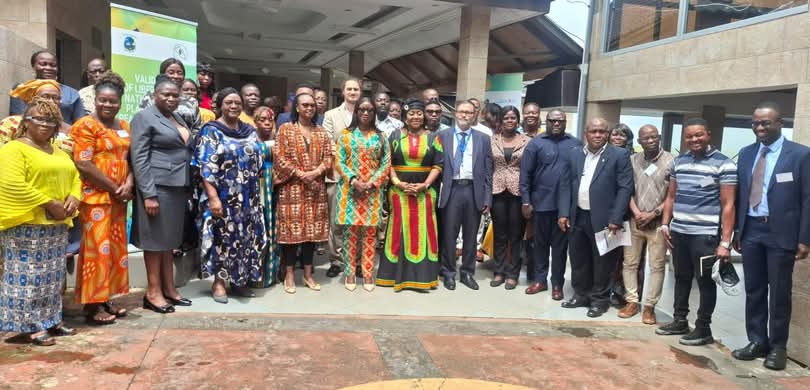
The Government of Liberia, through the Ministry of Gender, Children and Social Protection (MGCSP), has taken a bold step in establishing its global leadership on Women, Peace and Security as the commences the national validation of Liberia’s Third National Action Plan (NAP III) on Women, Peace and Security (WPS) under United Nations Security Council Resolution (UNSCR) 1325.
The validation workshop marks a significant milestone in Liberia’s continued efforts to consolidate peace, strengthen gender equality, enhance women’s participation in governance and decision-making, and reinforce institutional accountability in line with national, regional, continental, and global commitments.
Accrodin to a release issued by the Ministry of Gender , Minister of Gender, Children and Social Protection, Gbeme Horace-Kollie, described the validation as a defining milestone in Liberia’s continued leadership on the global Women, Peace and Security (WPS) Agenda under United Nations Security Council Resolution 1325.
The gathering brings together government institutions, the security sector, development partners, civil society organizations, traditional and religious leaders, academia, women and youth representatives, and international stakeholders to validate a nationally owned roadmap that will guide Liberia’s Women, Peace and Security Agenda over the coming years.
She noted that the validation reflects the Government’s determination to strengthen institutional accountability, deepen women’s participation in peacebuilding and governance, and develop a nationally owned, evidence-based, and results-oriented Third National Action Plan aligned with Liberia’s national priorities and international commitments.
Minister Horace-Kollie highlighted Liberia’s historic achievement as the first African country to adopt a National Action Plan on UNSCR 1325 and reaffirmed the Government’s commitment to advancing gender equality through successive action plans. She cited notable progress, including the appointment of Liberia’s first female Minister of National Defense and the increase in women’s representation in the Armed Forces of Liberia from 4% in 2022 to 7 % in 2024, alongside gains across other public and security institutions.
Despite these achievements, she acknowledged that Sexual and Gender-Based Violence (SGBV), intimate partner violence, harmful gender norms, and the underrepresentation of women in leadership, who currently occupy only about 11 percent of seats in the National Legislature, remain significant challenges requiring sustained action.
The Minister stressed that the Third National Action Plan must serve as a practical, inclusive, and transformative framework that strengthens institutional coordination, accelerates women’s leadership, and advances sustainable peace and development.
She reminded participants that the validation extends beyond a technical policy exercise, emphasizing that it represents the hopes and aspirations of rural women, market women, cross-border traders, Peace Hut members, farmers, and countless Liberian women whose lives and livelihoods depend on peace, justice, security, and equal opportunity.
Speaking on behalf of the Ministry of Justice, representatives reaffirmed the Government’s commitment to translating the principles contained in the Third National Action Plan into tangible protections and opportunities for women and girls. The Ministry pledged to continue strengthening legal frameworks, enhancing accountability mechanisms, expanding access to justice, and safeguarding women and girls from violence and discrimination while promoting their full participation in governance and peacebuilding.
United Nations Resident Coordinator Christine Umutoni commended the Government of Liberia, through the Ministry of Gender, for leading the development of the Third National Action Plan and successfully convening the National Validation Workshop. She acknowledged the African Union for its partnership and presence, describing it as a reflection of Liberia’s growing regional leadership on the Women, Peace and Security Agenda.
She also recognized UN Women for the sustained technical support provided throughout the development of the Action Plan and emphasized that the Women, Peace and Security Agenda remains closely aligned with Liberia’s broader national development priorities.
Madam Umutoni stressed that the Third National Action Plan must be practical, adequately financed, and supported by clearly defined institutional responsibilities, measurable targets, and realistic budgetary commitments capable of delivering measurable impact for women and communities across Liberia. She reaffirmed the United Nations’ continued commitment to supporting the Government of Liberia and the Ministry of Gender in implementing the Third National Action Plan and advancing the Women, Peace and Security Agenda.
Representing the African Union Special Envoy on Women, Peace and Security, Dr. Sally Wangamati described Liberia’s peacebuilding journey as one of Africa’s most inspiring success stories.
She paid tribute to the extraordinary courage, unity, and resilience demonstrated by Liberian women during the country’s civil conflict, recalling how Christian and Muslim women united through the historic Fish Market Movement to amplify their collective voices and help create the momentum that culminated in the Accra Comprehensive Peace Agreement.
According to Dr. Wangamati, the leadership demonstrated by Liberian women extended well beyond the signing of the peace agreement and has continued to shape national reconciliation, democratic governance, and post-conflict elections.
She welcomed the African Union’s continued collaboration with the African Women Leaders Network and underscored the importance of localizing National Action Plans so that they become community-owned instruments capable of delivering tangible peace dividends at the grassroots level.
Dr. Wangamati stressed that successful implementation requires sustained political commitment, gender-responsive financing, strengthened accountability mechanisms, and meaningful investments in women’s leadership.
“The African Union remains a steadfast partner to Liberia,” she affirmed. “We are confident that Liberia’s Third National Action Plan will not only guide national action but also continue to serve as a model of African leadership and inspire renewed commitment to the aspirations of Agenda 2063.”
Concluding her remarks, Minister Horace-Kollie expressed the Government of Liberia’s profound appreciation to all partners whose unwavering technical and financial support made the development of the Third National Action Plan possible. She extended special gratitude to UN Women Liberia, the Embassies of Sweden and Ireland, the African Union, the United Nations Country Team, government ministries and agencies, security institutions, civil society organizations, traditional and religious leaders, women’s and youth organizations, consultants, and all stakeholders whose expertise and collaborative spirit enriched the process.
She emphasized that their enduring partnership reflects a collective determination to advance gender equality, strengthen sustainable peace, promote women’s leadership, and build a more peaceful, inclusive, and prosperous Liberia for present and future generations.
Also speaking, UN Women Liberia Country Representative, Abul Hasnat Monjurul Kabir, reaffirmed the agency’s unwavering commitment to supporting the Government of Liberia in advancing the Women, Peace and Security Agenda. He emphasized that national ownership has remained the guiding principle throughout the development of the Third National Action Plan, with the Ministry of Gender, Children and Social Protection leading the process while UN Women provided technical support from the nationwide consultations and drafting workshop to the costing exercise and national validation.
Mr. Kabir noted that the validation presents an important opportunity to ensure the Action Plan reflects Liberia’s priorities and realities while advancing the Government’s ARREST Agenda for Inclusive Development, particularly in promoting inclusive governance, the rule of law, social cohesion, human capital development, and social inclusion.
He further observed that Liberia’s current tenure as a Non-Permanent Member of the United Nations Security Council provides a unique platform to showcase the country’s leadership in implementing the Women, Peace and Security Agenda at home while contributing to regional and global peace and security discourse. He reaffirmed UN Women’s continued commitment to supporting the Government from validation through implementation to ensure the Action Plan delivers tangible results for women and girls across Liberia.
The validation workshop continues Thursday, July 3, 2026.
Leave a Reply