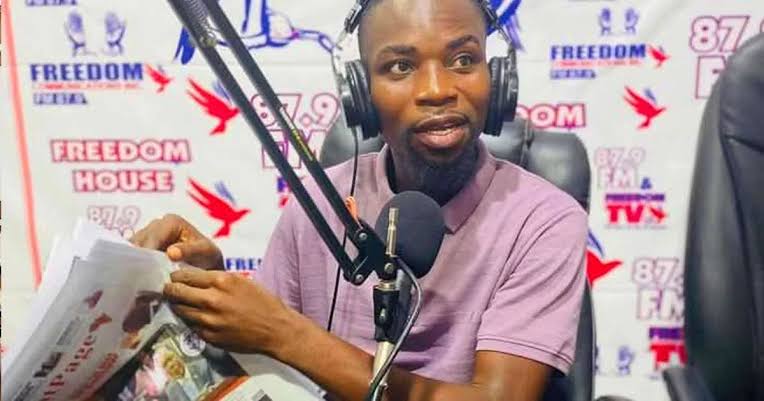
The sports reporter of The Liberian Investigator, Journalist Thomas Kojo Roulhac, has once again come under public scrutiny for disseminating unverified information, reigniting concerns about journalistic ethics and professionalism within Liberia’s sports media landscape.
On Monday, January 26, 2026, Roulhac took to his social media platform to report that sheriffs from the Paynesville Magisterial Court had **picked up and arrested the President of the Liberia Football Association (LFA), Mr. Mustapha I. Raji, following the issuance of a writ of arrest. According to his initial post, the writ stemmed from a complaint filed by Jubilee FC President, Mr. James Nimene, who alleged that he was slapped by the LFA President.
The report, however, was later proven to be inaccurate.
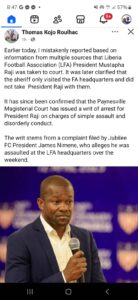
Moments after the post generated widespread attention, Roulhac returned to social media to issue a clarification, admitting that his earlier report was incorrect. He wrote:
“Earlier today, I mistakenly reported, based on information from multiple sources, that Liberia Football Association (LFA) President Mustapha Raji was taken to court. It was later clarified that the sheriff only visited the FA headquarters and did not take President Raji with them.”
He further stated: “It has since been confirmed that the Paynesville Magisterial Court has issued a writ of arrest for President Raji on charges of simple assault and disorderly conduct.”
The writ reportedly stems from a complaint filed by Jubilee FC President James Nimene, who alleged that he was assaulted at the LFA headquarters over the weekend. However, subsequent disclosures confirmed that Mr. Raji was never arrested nor picked up by court officers, contrary to Roulhac’s initial report.
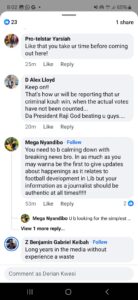
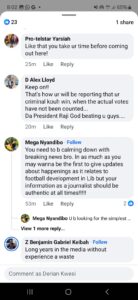
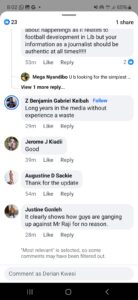
The misleading publication triggered a wave of criticism from followers, fellow journalists, and media observers, many of whom accused Roulhac of rushing to publish without adequate verification. Several commenters emphasized that accuracy must never be sacrificed for speed, particularly in sensitive legal matters.
One follower remarked, “Long years in the media without experience is a waste.” Another cautioned, “Do not be too emotional in breaking news. You are running to be a gonzo journalist, be careful.” Veteran Liberian sports journalist Julu Johnson also weighed in, stating, “Not nice of you. In this modern age to make such a mistake?” Others questioned why Roulhac repeatedly publishes what they described as negative and misleading information about the Liberia Football Association.
Critics further noted that this incident is **not an isolated case. In 2024, Journalist Roulhac came under disciplinary scrutiny from the Sports Writers Association of Liberia (SWAL) following a complaint involving the misquoting of a public official. SWAL records indicate that a default judgment was entered against Roulhac and other journalists involved in the case. The association’s disciplinary committee subsequently recommended that Roulhac issue an open apology and retraction on his public platforms to correct the misinformation.
According to SWAL , Roulhac and the other implicated journalist initially refused to cooperate with the investigation, but later issued apologies within internal association chat rooms, rather than through the same public channels where the inaccurate information had been disseminated. Media ethics experts observed at the time that such handling fell short of accepted professional standards, which require that corrections and apologies be issued with equal prominence and reach** as the original publication.
Observers argue that the recurrence of such incidents points to a troubling pattern of inadequate fact-checking and weak editorial judgment. While issuing corrections and apologies is an important step, repeated misreporting continues to undermine public trust and damages the credibility of Liberia’s sports journalism sector.
As the media environment becomes increasingly fast-paced and digitally driven, media practitioners are being urged to recommit to the core principles of journalism, accuracy, verification, balance, and accountability to ensure that the public is informed responsibly and not misled by premature or erroneous reporting.
By: Alfred Morris
Leave a Reply