
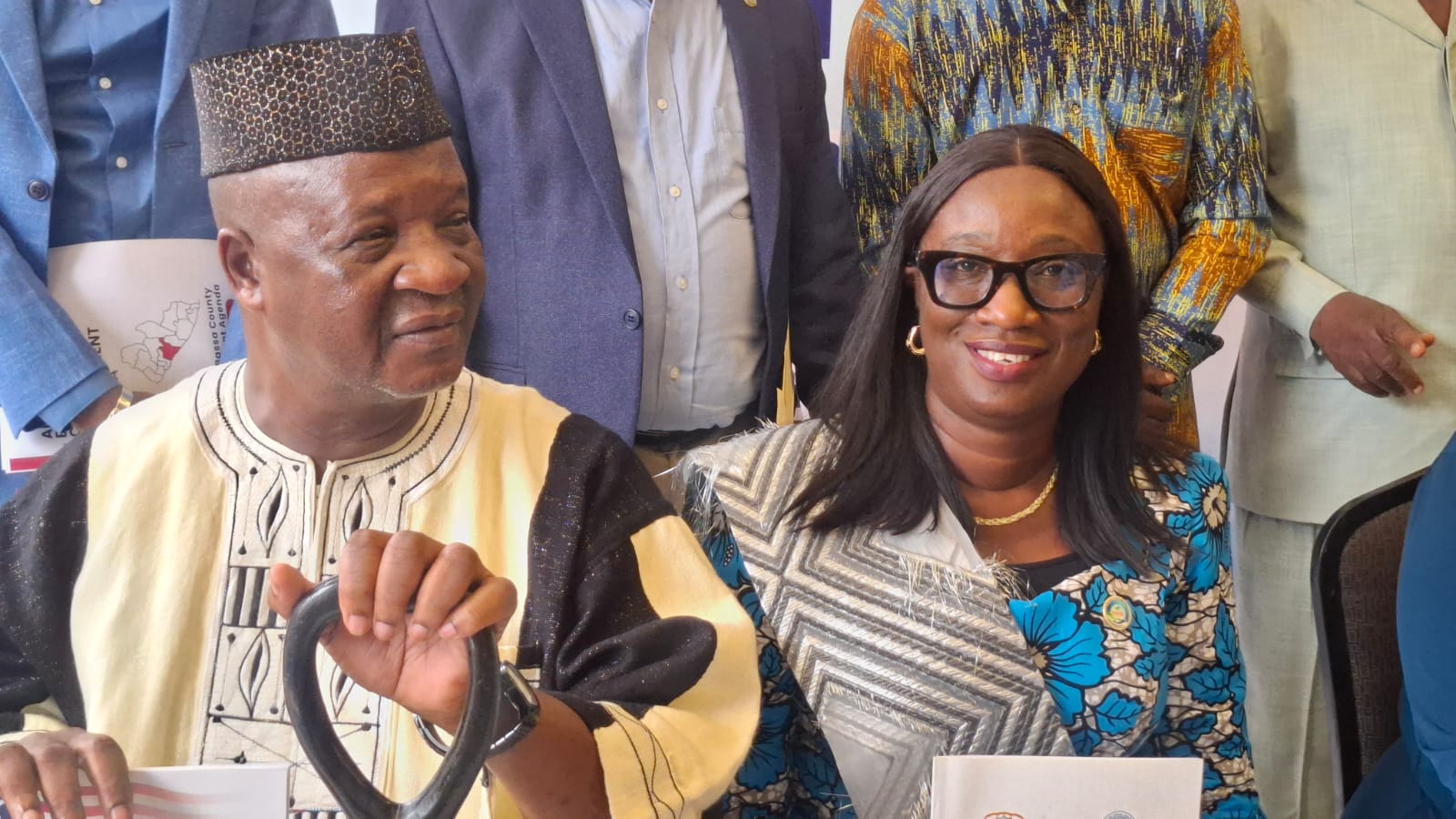
(Monrovia, January 20, 2026) , The Minister of Gender, Children and Social Protection, Hon. Gbeme Horace-Kollie, has called for the systematic integration of gender equality and social inclusion in Liberia’s decentralization process as the Ministry of Internal Affairs (MIA) officially launched its Five-Year Strategic Plan (2026–2030) alongside Phase II of the Local Government Act 10-Year Implementation Plan.
Serving as Chief launcher at the official ceremony, Minister Horace-Kollie welcomed the strategic initiatives, describing them as critical instruments for strengthening decentralized governance and addressing the realities faced by women, children, and vulnerable populations at the community level.
“These strategic instruments are opportunities to strengthen decentralized governance and, importantly, to advance gender equality and social inclusion,” she said. “Policies must not only be designed at the national level, but must respond to the lived realities of women, girls, children, and vulnerable populations across towns, villages, and districts.”
The Gender Minister emphasized that as Phase II of the Local Government Act Implementation Plan is rolled out, gender considerations must be deliberately mainstreamed across policy design, service delivery structures, budgeting, monitoring, and accountability mechanisms. She warned that decentralization must not be gender-blind or socially neutral, but instead intentionally address long-standing structural inequalities that have limited women’s participation in local governance.
Reflecting on lessons from the deconcentration phase of decentralization, the Gender Minister recalled concerns raised by women regarding access to services at the county level, noting that these concerns remain relevant as Liberia deepens its decentralization agenda.
She stressed that increasing women’s representation in local government structures, from counties to districts and communities is essential, not optional. According to her, women’s leadership at the local level enhances accountability, improves governance outcomes, and ensures that development priorities reflect diverse perspectives.
The Minister further urged local authorities to implement gender-responsive policies that prevent and respond to gender-based violence, protect children, promote girls’ education and economic empowerment, and expand access to social protection services. She highlighted the importance of gender-responsive budgeting and sex-disaggregated data as tools for measuring progress under the Local Government Act.
The program which was held at the Belle Casa Hotel brought together a cross-section of Government officials, civil society actors and the donor community.
In closing, she reaffirmed the commitment of the Ministry of Gender, Children and Social Protection to support the effective implementation of the plans, envisioning a Liberia where local governance is inclusive, accountable, gender-responsive, and people-centered.
She commended the Ministry of Internal Affairs and its partners for the progress made thus far and wished them success in implementing the ambitious plans.
Leave a Reply