
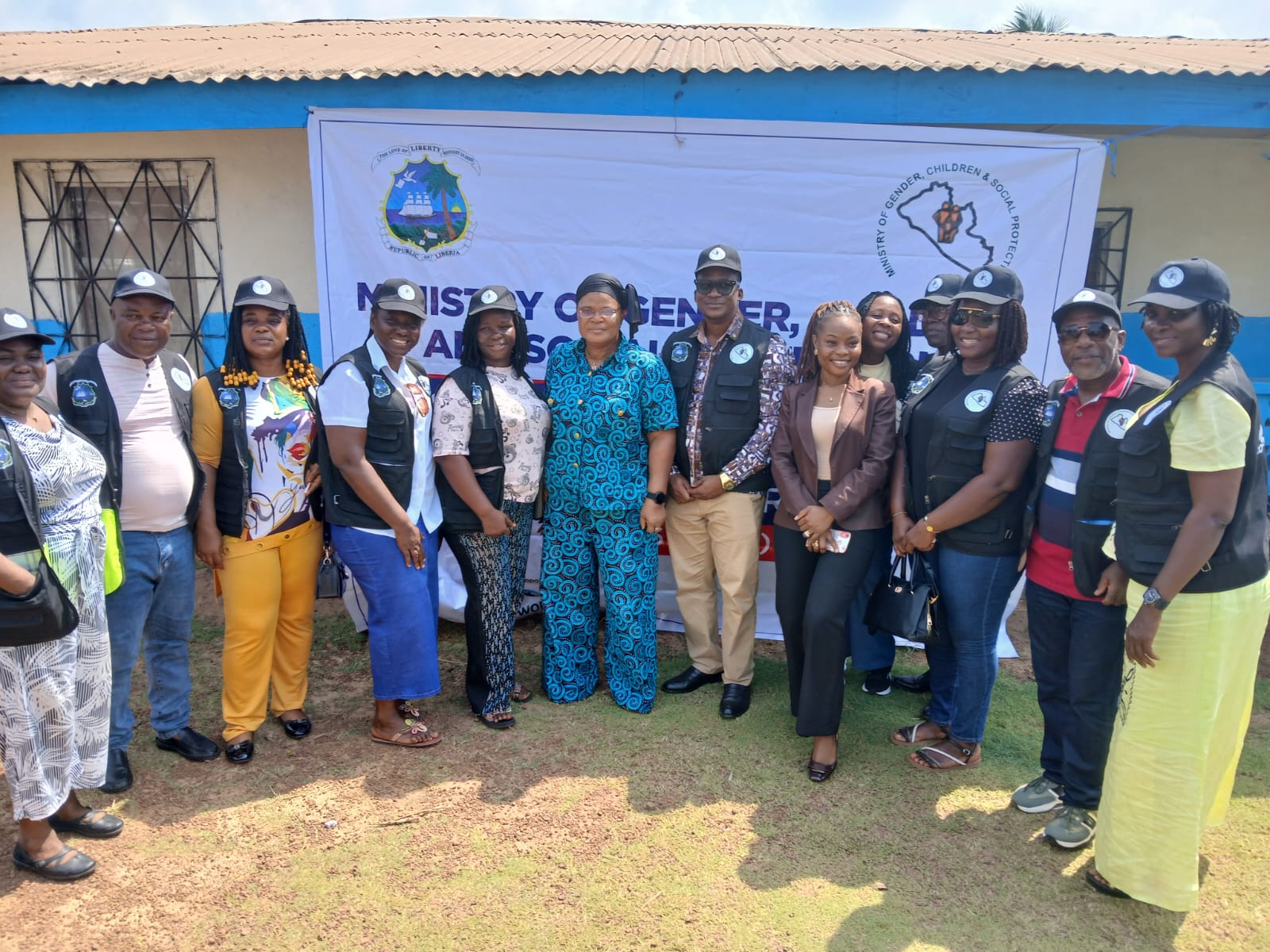
Buchanan, Liberia – January 27, 2026, The Ministry of Gender, Children and Social Protection (MGCSP) has begun regional stakeholder consultations in Grand Bassa and Bong Counties as part of the process to develop Liberia’s new National Gender Policy (2026–2036).
The consultation outreach is being led by the Deputy Minister for Research, Policy and Planning, Curtis V. Dorley, who officially opened the process in the port city of Buchanan, Grand Bassa County.
Speaking at the opening session, Dorley said the consultations mark a critical step toward strengthening gender equality, social inclusion, and coordinated development planning across the country.

According to him, the regional engagements are intended to gather local perspectives, review lessons from previous gender strategies, and identify priority thematic areas for the new policy. These include education, health, economic empowerment, governance and leadership, social protection, and the prevention and response to gender-based violence. The process also aims to improve coordination and accountability among government institutions, civil society organizations, development partners, and local communities.
The consultations in Grand Bassa and Bong Counties are scheduled to run from January 26 to 30, 2026, and will be followed by additional regional engagements and a national validation exercise.
Dorley traced the origins of Liberia’s National Gender Policy to 2009, following the country’s adoption of key international and regional gender equality instruments. The first policy, which covered the period 2010–2020, focused on promoting gender equality, women’s empowerment, and gender-responsive governance across public institutions.
He noted that a midterm review in 2015 and a revision in 2017 extended the policy’s lifespan to 2022. An end-line content and impact evaluation later rated the policy’s overall performance at 61.1 percent, indicating measurable progress but also highlighting persistent gaps and structural challenges.
“The evaluation shows that while gains were made, significant work remains to address structural inequalities and harmful social norms that continue to disproportionately affect women and girls,” Dorley said.
He explained that the new National Gender Policy will run for ten years, with a planned midterm review, and will be informed by evidence and stakeholder inputs gathered during the consultations. These inputs, he said, will shape the policy’s theory of change, strategic priorities, and implementation framework.
Dorley urged participants to engage critically with the evaluation findings and to provide practical recommendations that take into account emerging challenges such as financing constraints, demographic changes, and evolving national and regional development priorities.
The Deputy Minister also highlighted that the policy development process aligns with Liberia’s new national development framework, the ARREST Agenda for Inclusive Development (AAID), noting that gender equality remains a cross-cutting issue influencing economic growth, human capital development, peacebuilding, and national cohesion.
The launch in Buchanan brought together gender county coordinators from across the fifteen counties, social protection actors, civil society representatives, and other stakeholders.
Liberia is a signatory to several international and regional instruments on gender equality, including the Convention on the Elimination of All Forms of Discrimination against Women (CEDAW), the Convention on the Rights of the Child, the Maputo Protocol, and the African Charter on the Rights and Welfare of the Child. At the national level, these commitments have informed legislation such as the Children’s Law, the Rape Law, the Domestic Violence Law, the Land Rights Law, and the National Action Plan on Women, Peace and Security.
Despite these legal and policy gains, authorities acknowledge that discrimination, violence, and unequal access to opportunities persist, underscoring the need for a stronger and more coherent national gender policy framework.
“Let the new National Gender Policy reflect a Liberia where women and men, girls and boys, rural and urban communities all have equal opportunities to thrive,” Dorley said.
Leave a Reply