
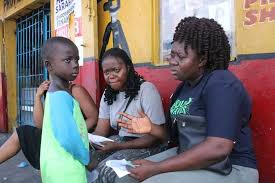
Liberians have hailed the Ministry of Gender, Children and Social Protection (MGCSP) for its efforts to reduce the number of children living and working on the streets, while calling on the Ministry to expand its interventions.
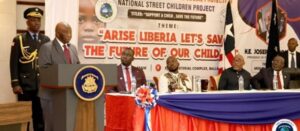
The acknowledgment came during a recent appearance by the Ministry’s Street Child Project team on ELBC, where officials provided updates on progress made since the project’s launch in August 2024 by President Joseph Nyuma Boakai.
Mr. Alex Divine, Project Lead, reported that over a two-year period, 13,591 children have been removed from street situations and successfully reunified with their families. Additionally, 4,110 formerly out-of-school children have now been enrolled and are attending school.
“In 2025 alone, the Ministry successfully removed 8,112 children from the streets and enrolled 2,705 previously out-of-school children into academic programs,” Mr. Divine said.
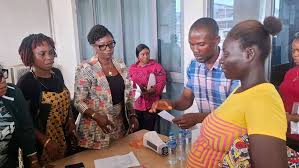
He added that the Ministry has also provided economic empowerment support to 3,774 caregivers through small business grants, Technical and Vocational Education and Training (TVET), and other family-strengthening interventions. The Project Lead also disclosed that 120 the caregivers are visually impaired, demonstrating the Ministry’s commitment to inclusive support.
Mr. Divine further disclosed that recently over 100 visually impaired caregivers received financial literacy training and were integrated into Village Savings and Loan (VSL) clusters, followed by disbursement of small business grants of L$21,000 to each beneficiary.
Liberians who called on the ELBC’s program acknowledged the Ministry’s achievements and applauded the reduction in children selling and begging across the city. The show’s presenter also noted visible improvements in child welfare in Monrovia.
The Ministry was encouraged to beef up its monitoring of the process.
The Street Child Project, launched by President Boakai, continues to focus on family reunification, education access, and caregiver empowerment, signaling Liberia’s commitment to protecting vulnerable children and promoting inclusive development.
By: Alfred Morris
Leave a Reply